
Bingham County Arrest Records and Charges
Arrest records are created on the law-enforcement side when a person is arrested, booked, or otherwise processed by the Bingham County Sheriff's Office, Blackfoot Police, Idaho State Police, or another agency. The official detention research supports a local adult jail, booking contacts, inmate information contacts, and sheriff records routing, but it did not confirm a public web roster field set. A booking or arrest record can help explain custody status, but it is not the same as the court charge record that follows.
Once a case moves toward prosecution, the Bingham County Prosecuting Attorney decides what charges to file. The prosecutor files criminal-law violations for the county, and the court clerk maintains the case file after filing. For the full criminal case file, including pleas, hearings, disposition, and sentencing, use the criminal court records page. For booking and custody status, use jail and inmate channels.
The Bingham County prosecutor page gives the local office address and general criminal-prosecution role.
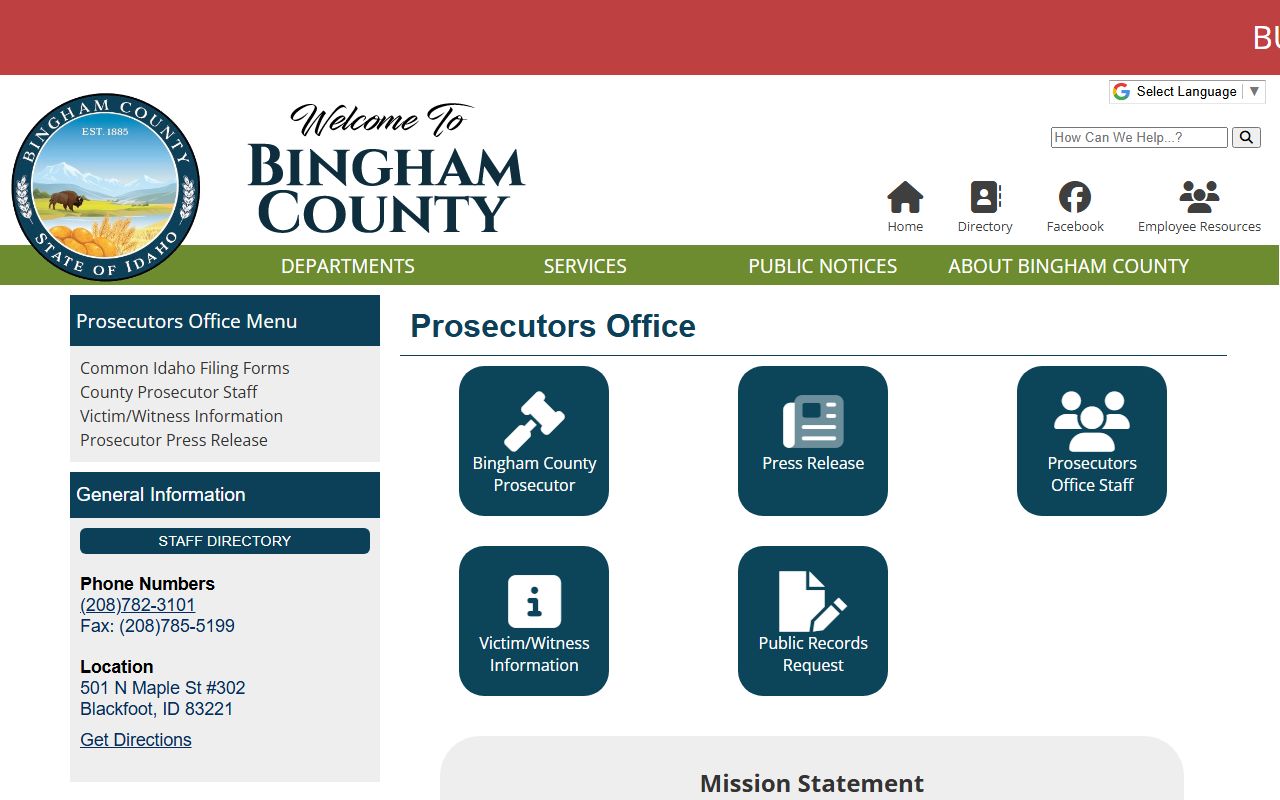
That office is important because court charges after arrest are not final until a prosecutor files or declines the charge and the court records the case activity.
Find Bingham County Arrest Records
There is no single official Bingham County page that combines booking, prosecutor charging decisions, court case status, and statewide criminal history. Use a channel sweep. Start with iCourt for filed cases and public charge status. For booking or incident records, contact Sheriff's Records or detention. For state criminal-history relief or non-conviction expungement issues, Idaho State Police criminal-history rules may matter. If the person is sentenced to state custody or supervision, the Idaho Department of Correction resident/client search is separate from the county jail.
- Search Idaho iCourt by name or record number for filed Bingham County criminal cases.
- Use Bingham County filters, case type filters, or date ranges when a common name returns too many records.
- Read the charge list, filing date, court, case status, hearing events, and payment eligibility if public.
- For booking or custody details, call detention booking at (208) 782-3055 or inmate information at (208) 782-3057.
- For public law-enforcement records, call Sheriff's Records at (208) 782-3082 and expect investigatory limits.
- For certified court copies, submit the Bingham County court record request to the court records clerk.
Charges can also connect to warrants. A missed hearing, unpaid fine plan, probation issue, or treatment-court noncompliance may produce a bench warrant. Bingham County's court warrants contact is Tori Lambert, Treatment Court Clerk & Warrants, at (208) 782-3118.
Bingham County Court Charges
The prosecutor is the bridge between arrest and formal court charging. Bingham County identifies Ryan W. Jolley as County Prosecuting Attorney, with deputy prosecutors and victim/witness staff listed on the county prosecutor staff page. The prosecutor is the county's top law-enforcement official for local prosecution and the legal advisor to county elected officials and the Board of County Commissioners. For court charge records, the key point is simpler: police may arrest or cite, but the prosecutor decides which charges are filed in court.
The Bingham County prosecutor staff page identifies the prosecuting attorney and deputy prosecutor names tied to local charging work.
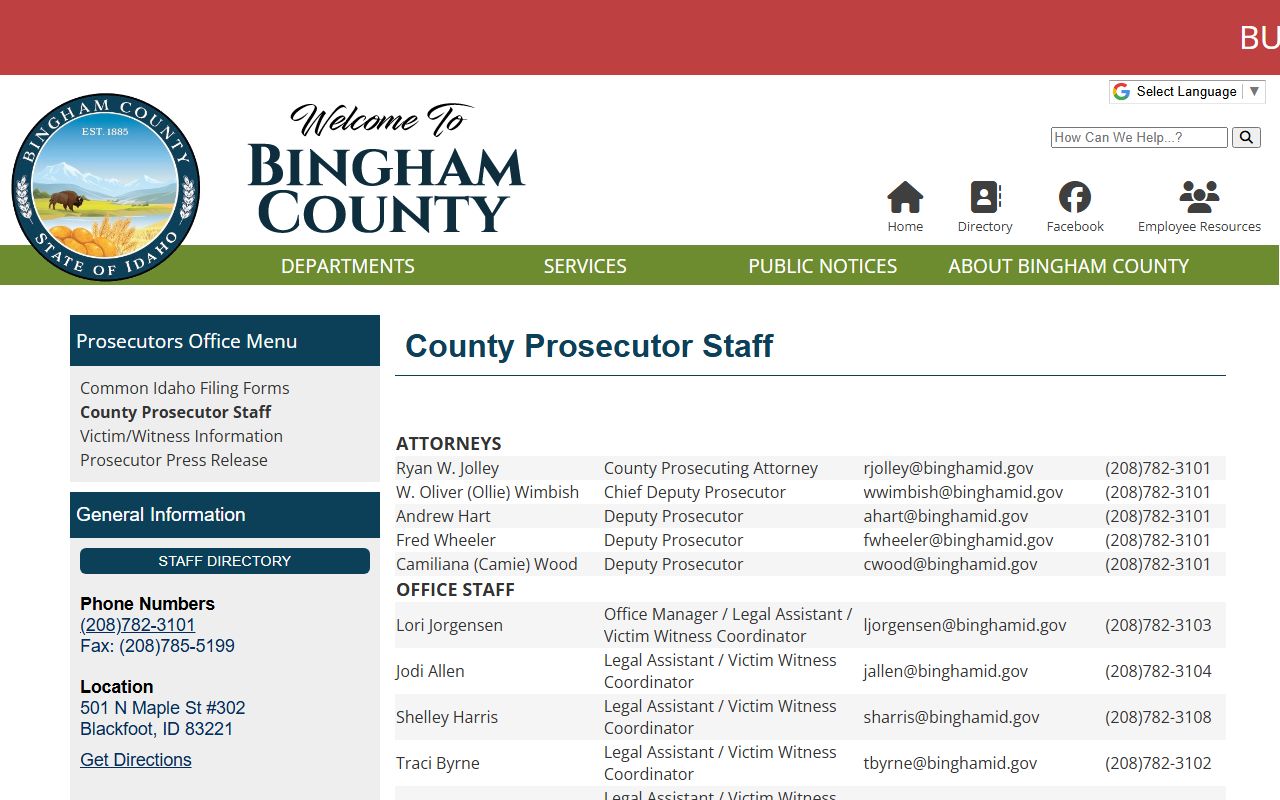
Names and staff assignments can change, so use the county page for current office routing before calling about a pending charge.
Bingham County Prosecuting Attorney
501 N Maple St #302
Blackfoot, ID 83221
(208) 782-3101
Fax: (208) 785-5199
Court Records Clerk
501 N Maple
Blackfoot, ID 83221
(208) 782-3130
lgardner@bingham.idcourts.gov
Charges After Arrest Documents
A court charge record begins when allegations are filed in a court case. The research glossary identifies a complaint as the filing that can begin a civil case or state criminal allegations, an information as a prosecutor-filed formal felony charging document, and an indictment as a formal charge issued through grand-jury procedure. Bingham County misdemeanor cases generally stay in Magistrate Court, while felony cases begin with early magistrate proceedings and may move to District Court after preliminary stages.
| Document | Who Files or Issues It | How It Fits Bingham Cases |
|---|---|---|
| Complaint | Prosecutor or law-enforcement supported filing | States criminal allegations and can begin misdemeanor or early criminal proceedings. |
| Information | Prosecutor | Formal felony charging document after the case moves beyond early proceedings. |
| Indictment | Grand jury | Formal charge from grand-jury procedure, less common in routine county searches. |
Bingham County Charge Status
Charges can change after filing. A count may remain pending while hearings continue. It may be amended if the prosecutor changes the statute, count, or severity. It may be reduced during plea negotiations or dismissed by the court. It may result in a guilty plea, no-contest plea, trial verdict, withheld judgment, sentence, probation, fine, restitution, or post-conviction activity. A court charge record should be read by count, not just by case number, because one arrest can lead to several separate charges with different outcomes.
| Status | What It Means |
|---|---|
| Pending | The charge is filed and unresolved, or the case is still moving through hearings. |
| Amended or reduced | The charge changed by filing, plea, order, or negotiation, often to a different count or severity. |
| Dismissed | The charge was ended by court action. Dismissal does not always erase the public case record. |
| Disposed | The charge has an outcome, such as plea, verdict, dismissal, judgment, sentence, or other final action. |
Charges vs Convictions
Being charged is not the same as being convicted. A charge is an allegation filed in court. A conviction requires a guilty plea, no-contest plea where treated as a conviction, or guilty verdict. Bingham County court records may show both accusations and outcomes, so read the disposition and sentence fields before describing a record as a conviction. The criminal-history route is also different from a court-record route because state criminal history can involve Idaho State Police rules and non-conviction expungement procedures.
| Issue | Charge | Conviction |
|---|---|---|
| Meaning | An alleged offense filed by the prosecutor or court process. | A final finding or plea that results in a judgment or sentence. |
| Where to check | iCourt case record, charge list, complaint, information, indictment. | Disposition, judgment, sentence, plea, verdict, probation, fine, or post-conviction entries. |
| Public risk | Can be public even before proof at trial. | Can remain public unless sealed, shielded, expunged, or otherwise restricted. |
Bingham County Public Defense
Public defense is separate from the prosecutor and from casual court lookup. Idaho uses a statewide State Public Defender Office led by Eric Fredericksen, with district defenders supervising indigent defense in Idaho's seven judicial districts. A person in a Bingham criminal case who cannot afford counsel should request appointment through the court process. Eligibility and appointment are handled through court and public-defense procedures, not through the prosecutor, jail commissary, or a private search site.
The Idaho State Public Defender homepage explains the statewide defense system for people who may qualify for appointed counsel.
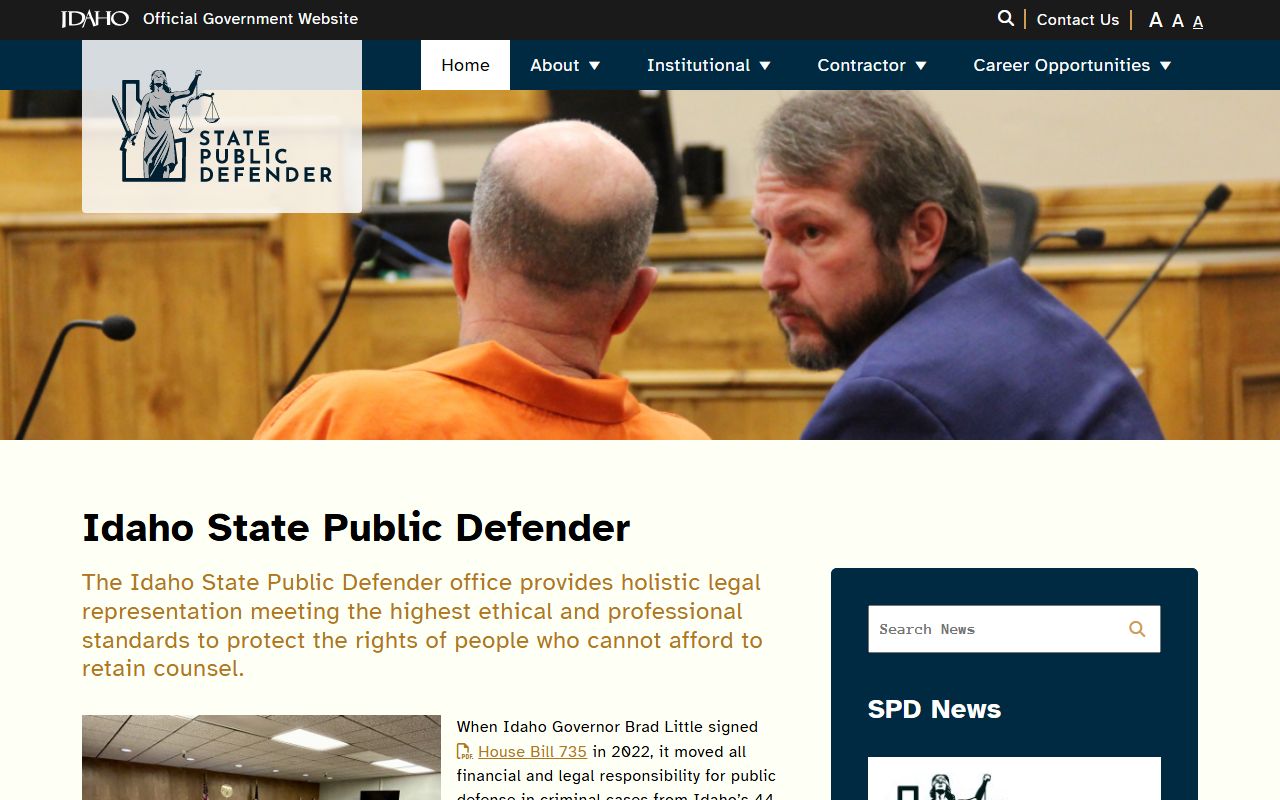
That statewide structure matters when a Bingham County arrest leads to charges and the defendant needs counsel before making court decisions.
The State Public Defender contact page gives statewide office contact information and routing for public-defense questions.
Family members should avoid treating public court-search results as legal advice and should route defense questions through counsel or the court appointment process.
Restricted Arrest Records and Charges
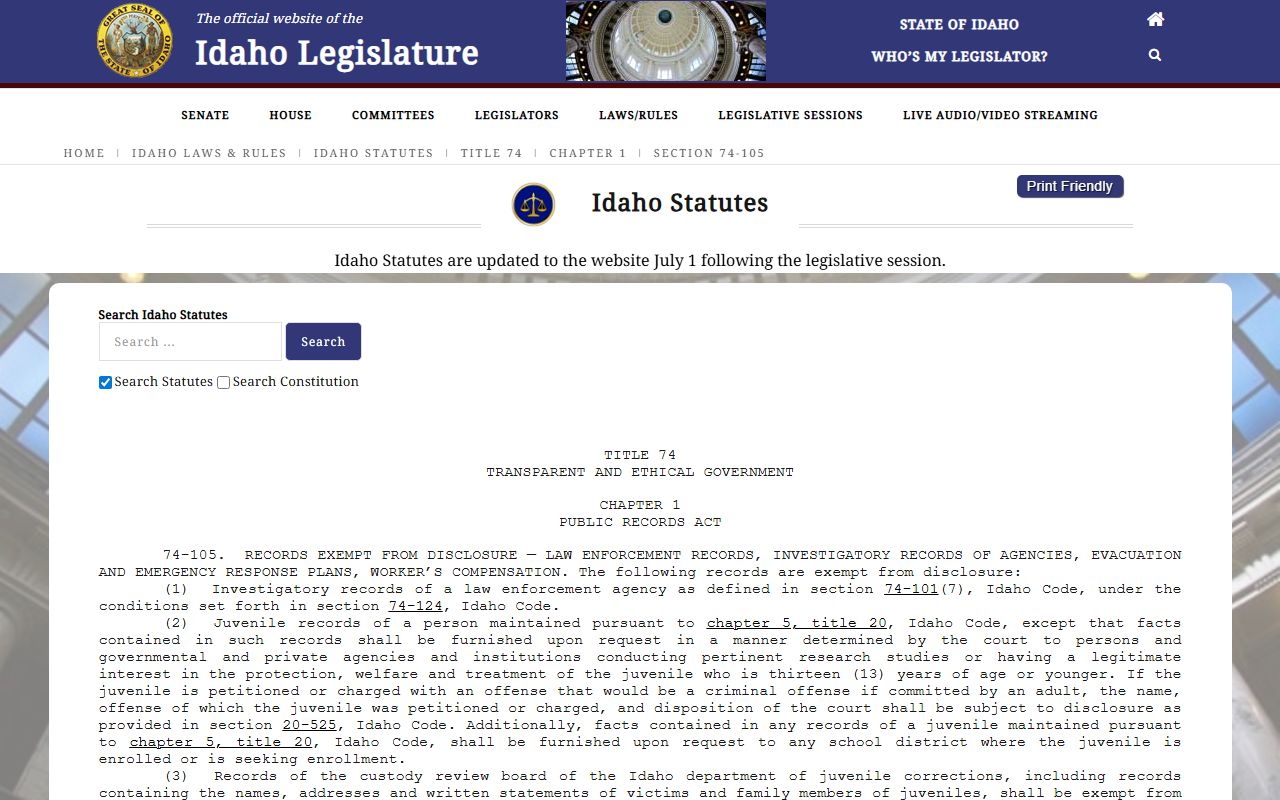
Access limits are important in Bingham County arrest records and court charge records. Idaho Court Administrative Rule 32 governs judicial records, including sealing, redaction, shielded records, compiled information, and exempt records. Idaho Code 74-105 covers law-enforcement and investigatory record exemptions, which can affect police reports, active investigations, some witness or victim details, and pending warrant material. Juvenile records, protected addresses, financial identifiers, minor information, mental-health records, and sealed probable-cause material can also be restricted.
Idaho's law-enforcement exemption statute is especially relevant when an arrest report is requested before a court charge is complete.
When a sheriff record is denied or redacted, the related iCourt charge record may still show public case status after the prosecutor files the court case.
| Record Relief | What It Can Do | Bingham County Route |
|---|---|---|
| Sealing | Limits public access to a court record or event entry. | File the correct motion or petition in the court that handled the case. |
| Expungement of non-conviction criminal history | Can limit qualifying arrest/fingerprint or criminal-history records after dismissal, acquittal, or no charge within one year. | Idaho Code 67-3004 procedures may involve Idaho State Police and court-file sealing. |
| Withheld judgment or shielding | May limit what appears publicly in some conviction-related situations. | Depends on offense type, completion, waiting period, and court order. |
Note: A restricted record may still be available to courts, law enforcement, or authorized agencies even when the public cannot see it.
Background Check Limits
A Bingham County arrest or charge lookup is not an FCRA-compliant background check. Court and sheriff records can be incomplete, delayed, sealed, amended, or dismissed. The court record may show a charge before the outcome is entered, while a state criminal-history record may follow separate Idaho State Police rules. Employers, landlords, insurers, lenders, and licensing decision-makers must use proper legal screening channels rather than casual public-record searches.
Important: This website is not a consumer reporting agency, and its information cannot be used for FCRA-regulated decisions.