
Bingham County Probate Court Structure
Probate in Bingham County is handled by the Magistrate Division of the District Court. That point is important because Bingham County does not have a separate probate court with a separate clerk, website, or courthouse. The Bingham Magistrate Court page states that magistrate judges handle probate cases, including wills and estates, as well as guardianships and conservatorships. Idaho Judicial Branch court-structure material also places probate matters, guardianships, and conservatorships in the Magistrate Division.
The practical result is simple. A user looking for Bingham County probate records should use the same state court access channels used for other Magistrate Division cases: iCourt for case and hearing status, the courthouse kiosk or court records counter for document access, and the Bingham court record request form for copies. The county public-records form is useful for county administrative records, but it is not the main route for judicial probate files governed by court access rules.
Bingham County Magistrate Court
501 N. Maple #402
Blackfoot, ID 83221
(208) 782-3121
Fax: (208) 782-3167
8:30 AM to 4:30 PM MST, Monday-Friday, open during lunch, closed federal holidays
Bingham County Probate Terms
Probate records use terms that can be confusing because one file may involve an estate, a will, guardianship authority, or conservatorship authority. These short definitions keep the court terms tied to the Bingham County Magistrate Division context.
- Testator
- The person who made a will.
- Personal representative
- The person appointed by the court to administer an estate. Some wills use the term executor.
- Intestate
- Dying without a valid will, which means estate distribution follows state law and court orders.
- Guardianship
- A court case about legal authority to care for a minor or incapacitated person.
- Conservatorship
- A court case about authority to manage another person's money or property.
- Letters
- Court-issued papers showing a representative's authority, such as letters testamentary or letters of administration.
These labels may appear in iCourt status entries, hearing notices, petitions, orders, or certified copies. They do not mean every supporting document is public.
Search Bingham County Probate Hearings
Local probate hearings appear in iCourt Search Hearings under Bingham probate or mental-health filters. iCourt is a status and calendar tool, not a promise that every probate document can be downloaded by the public. Idaho's court-record access material separates general case information in iCourt from records from a court case, which are obtained at a county courthouse kiosk or requested from the clerk where the case was filed.
| Field label | Type | Required | Options or notes |
|---|---|---|---|
| Select Location | Dropdown | Yes | Choose Bingham County. |
| Select Hearing Types | Dropdown | Yes | Use Bingham - Probate or Mental Health for probate-related hearing checks. |
| Select Search Types | Dropdown | Yes | Case Number, Party Name, Business Name, Attorney Name, Attorney Bar Number, Judicial Officer, or Courtroom. |
| Last Name / First Name / Middle Name | Text | Conditional | Used for party-name searches. |
| Search by Criteria | Text | Conditional | Used for case number, attorney, courtroom, or judicial officer search. |
- Open the Idaho iCourt public portal and choose hearing search or Smart Search.
- Set the location to Bingham County when the tool allows location filtering.
- For hearings, select Bingham - Probate or Mental Health when the hearing type is available.
- Search by case number, party name, estate name, attorney, judicial officer, or courtroom if known.
- Use the result to confirm case status or hearing dates, then request actual copies from the clerk if needed.
Note: Sealed cases and records exempt under Idaho Court Administrative Rule 32 may not appear in public portal results.
What Bingham County Probate Records Show
A Bingham County probate case file can include an application or petition to open probate, an original or copy of a will, death certificate references, appointment papers for a personal representative, letters testamentary or letters of administration, creditor notices, inventories, accountings, distribution proposals, orders approving final distribution, bond papers, reports, and closing documents. Guardianship and conservatorship cases can include petitions, reports, medical or incapacity evidence, accountings, and court orders.
Public access is narrower than the possible file contents. A public iCourt result may show a case number, party name, case type, case status, court location, judicial officer, filing date, events, or hearings. Supporting documents may require clerk review before release. Medical evidence, minor details, financial account information, protected addresses, and sealed documents can be withheld or redacted. If a certified copy is needed for bank, property, estate, or agency use, the request should ask for certification and identify the exact order or letters needed.
Bingham County Probate Copy Fees
Bingham County research did not extract a separate local probate filing fee schedule from the civil filing fee PDF. The record-copy fees were captured from the Bingham County Court Record Request form and Idaho clerk fee authority. Those fees apply when the request is for copies or certification of court-file documents that can be released.
| Probate record item | Fee or rule |
|---|---|
| Court record copy | $1.00 per page |
| Certification | $1.00 per document |
| Probate filing fees | Separate Bingham probate filing fee not extracted from official PDF in research |
| Denied or redacted records | Confidential or exempt material may be withheld under ICAR 32 |
The Idaho clerk fee statute supports the fee authority cited by the court record request form.
Source: Idaho clerk fee statute
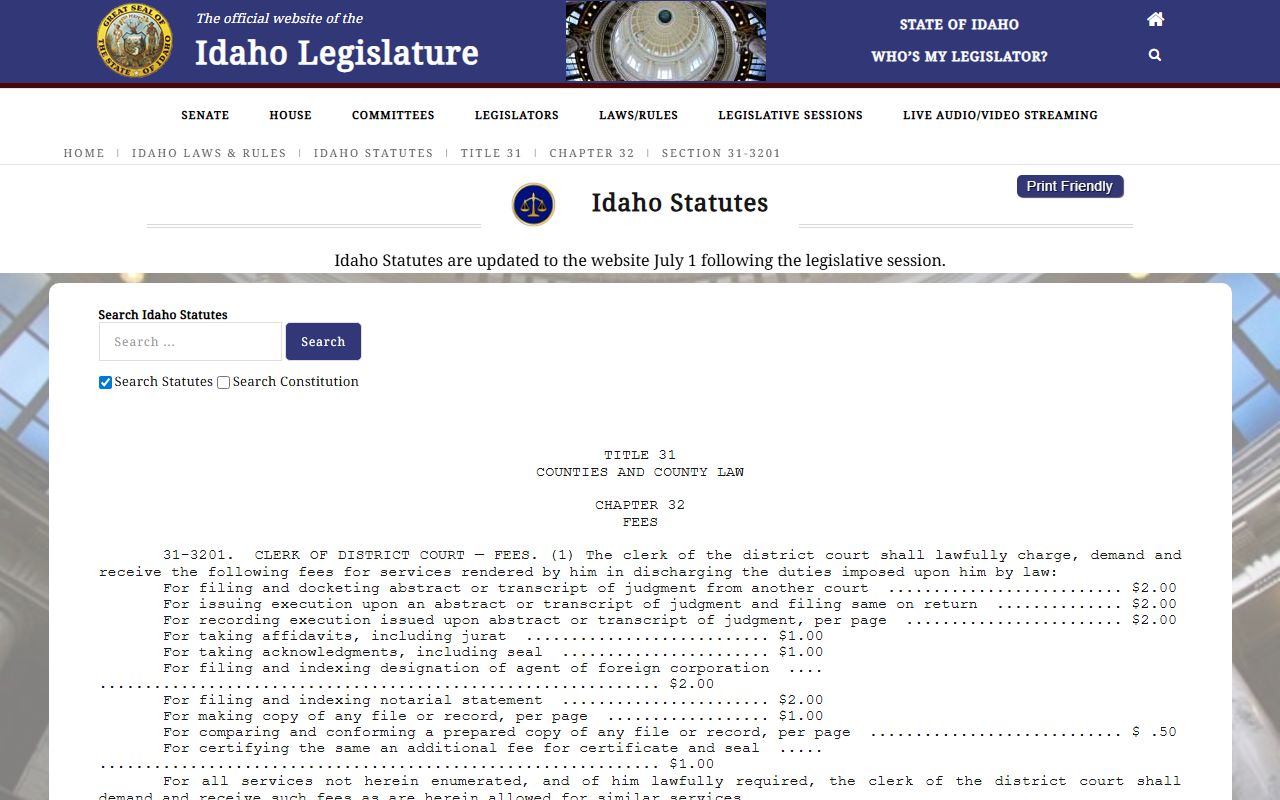
The fee statute matters for Bingham County probate records because certified probate orders and letters often need both page copies and document certification.
Request Bingham County Probate Documents
For actual probate documents, use the Bingham County Court Record Request form or the courthouse kiosk process. The request form asks for the requester's name, address, phone, email, whether the requester is a party to the case, the Bingham County case number if known, date of birth where relevant, a description of the requested record, and a signature. The description should identify party names, document types, approximate date opened, and whether certification is needed.
The form says the requester will be notified within three working days of action being taken, and the Clerk's Office will attempt to locate the file within 10 working days. It also includes a Notice of Denial area for exempt records and an "Approved for Release by Judge" area for records that require judicial approval. That is especially relevant for guardianship, conservatorship, mental-health, minor, and sealed probate material.
Idaho Guide and File and Idaho File & Serve may also matter before or during probate filing. Guide and File supports guided interviews for self-represented users when forms are available. File & Serve is the electronic filing portal used in many Idaho court situations. These tools help with filing channels, but they do not replace clerk review for copies of an existing probate file.
Source: Idaho File & Serve electronic filing portal
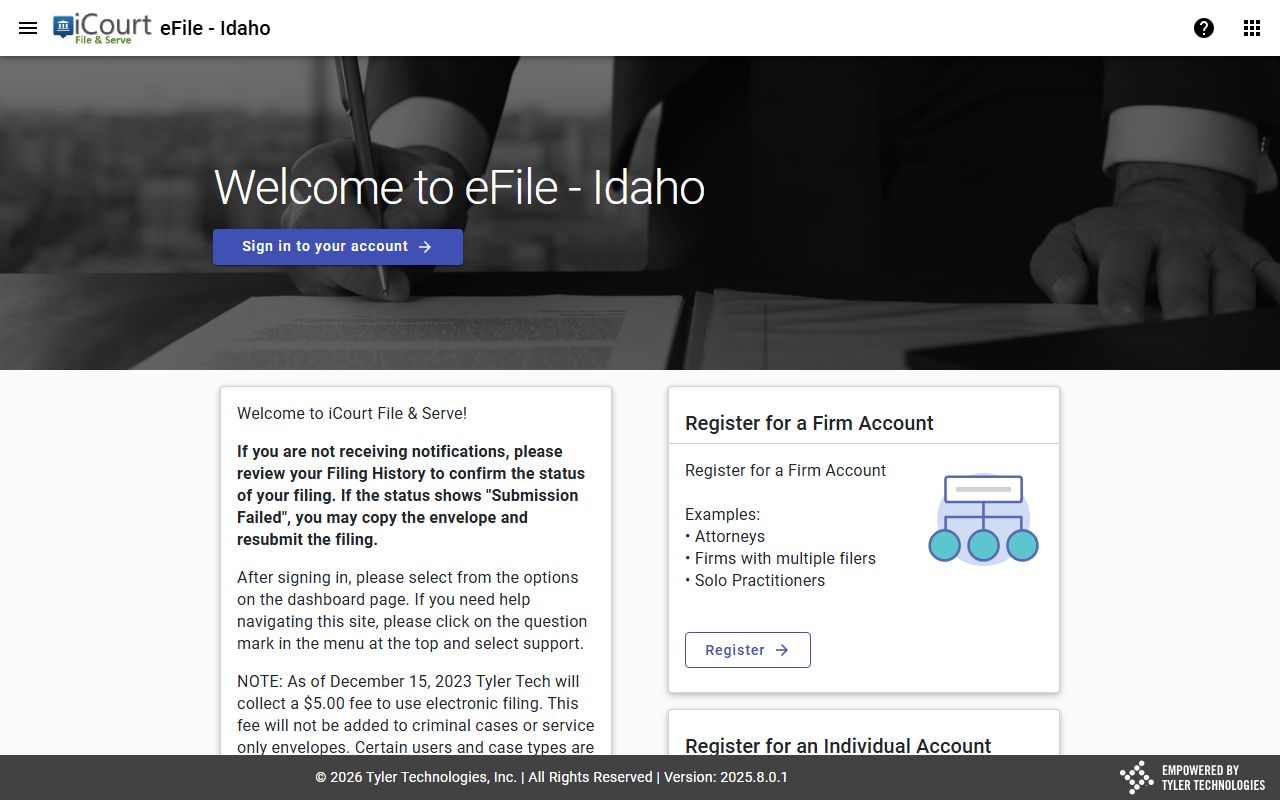
File & Serve is relevant to Bingham County probate records when a court filing must be submitted electronically rather than handled only at the counter.
Restricted Bingham County Probate Records
Probate cases are not all open in the same way. Estate administration may have public orders and docket entries, while guardianship, conservatorship, mental-health, minor, medical, financial, or sealed materials may be restricted. Idaho Court Administrative Rule 32 controls public access to judicial records and allows sealed, shielded, exempt, and redacted material to be kept from public inspection. The iCourt portal also says sealed cases and certain exempt information will not appear in public results.
Common restrictions include Social Security numbers, financial account numbers, protected addresses, medical records, minor names, incapacity evidence, adoption-linked material, and mental-health treatment details. A requester should ask for the public order, letters, inventory, or accounting by name rather than asking for "everything" if only a specific certified document is needed. Narrow requests are easier for the clerk to review and less likely to include material that must be denied or redacted.