
Bingham County Criminal Court Records
A Bingham County criminal court record is the court case file created after a prosecutor files charges or a criminal summons moves into court. The file is different from an arrest report. It is maintained by the court clerk and can show the formal charge, court appearances, plea, motions, hearings, warrants connected to the case, judgment, sentence, fines, restitution, probation, and post-conviction activity. For a closer focus on the filed charge itself, use the separate Bingham County court charge records page.
Local court level matters. The Magistrate Division handles misdemeanors, initial appearances, bail, warrants, and preliminary examinations for felonies. If a felony is bound over after preliminary proceedings, District Court handles the felony case, trial-level motions, plea or verdict, sentencing, post-conviction relief, and any appeal from the magistrate. The Bingham County Prosecuting Attorney files and prosecutes criminal-law violations for the county, while the Clerk of the District Court / County Clerk keeps the case file and certified-copy process.
Search Bingham County Criminal Cases
Use iCourt Smart Search to look up public Bingham County criminal case status by record number or defendant name. Advanced filters can narrow the search by Bingham County location, case type, status, file date, and judicial officer. For hearing dates, use Search Hearings and select Bingham - Criminal. If the needed item is a pleading, order, judgment, sentence, or certified copy, request it from the clerk or use a courthouse kiosk when public.
- Search iCourt by record number if the case number is known.
- Search by defendant name when the number is unknown, using the portal's last-name and first-name format.
- Apply Bingham County, criminal case, date, or judicial-officer filters when several records appear.
- Read the docket events for arraignment, hearing dates, disposition, sentencing, and payment eligibility.
- Ask the court records clerk for copies or certification when online status is not enough.
Idaho Code 74-102 states the general right to inspect and copy public records unless another law restricts access.
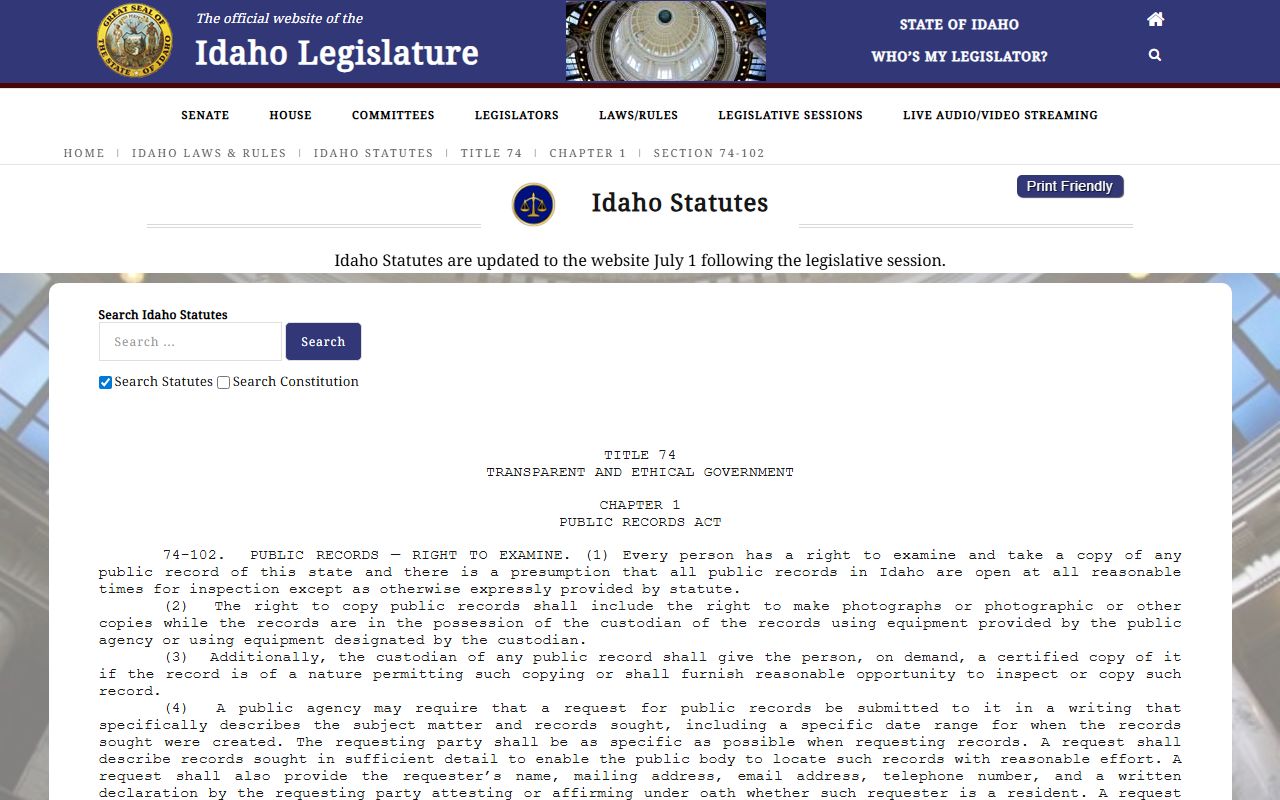
For criminal court files, that open-records premise is applied with Idaho's judicial-record rules, court orders, and case-specific restrictions.
Bingham County Criminal Case Flow
Criminal court records are easiest to read in order. A case may begin with arrest, citation, summons, or a prosecutor's filing, but the court file begins to matter once a charge is filed and a judge starts making case decisions. Misdemeanors often remain in Magistrate Court. Felonies commonly start with initial appearance and preliminary hearing in Magistrate Court, then move to District Court if probable cause supports bindover.
Case flow: Charges Filed › Arraignment › Pretrial / Motions › Plea or Trial › Disposition › Sentencing
| Stage | What Happens |
|---|---|
| Charges Filed | The prosecutor files a complaint, information, or other charging document that starts the court case. |
| Arraignment | The defendant is advised of the charge and enters a plea, commonly guilty, not guilty, or no contest. |
| Pretrial / Motions | The parties file requests, address bond, exchange case issues, and prepare for plea, trial, or dismissal. |
| Plea or Trial | The case resolves by plea, verdict, acquittal, dismissal, amendment, or other court action. |
| Disposition | The docket records the outcome of each charge or the case as a whole. |
| Sentencing | The court imposes jail or prison, probation, fines, restitution, treatment terms, or other conditions when there is a conviction. |
What Bingham County Criminal Records Show
A public Bingham County criminal court record can show case-level identifiers and the main procedural history. The online result may be enough to verify a case number, court, hearing, disposition, or payment status. The complete criminal case file can contain more, including charging documents, motions, orders, judgment, sentence, probation terms, restitution, and post-conviction filings. Some attachments, warrant materials, juvenile details, victim information, and sealed items may be redacted or withheld.
| Field | What It Shows |
|---|---|
| Case Number | The record number used for iCourt lookup, clerk requests, hearings, and payment checks. |
| Defendant | The person charged in the criminal court case, subject to redaction rules for protected data. |
| Court Level | Whether the case is in Magistrate Court or District Court. |
| Charges | The alleged offenses, count numbers, statute references, and severity where public. |
| Bond or Warrant Events | Public entries about appearance conditions, warrants, returns, or missed hearings when not sealed. |
| Plea | The formal answer to a charge, such as guilty, not guilty, or no contest. |
| Motions and Orders | Requests made to the court and rulings by the judge. |
| Disposition | The outcome of the charge or case, such as dismissed, amended, acquitted, guilty, or judgment entered. |
| Sentence | Jail, prison, probation, fines, restitution, treatment, or other conditions imposed after conviction. |
| Payment Status | Fine, fee, payment plan, or review-hearing data when available through iCourt or the court clerk. |
Bingham County Charges vs Convictions
A criminal charge is an allegation filed in court. A conviction is a final outcome after a guilty plea, no-contest plea treated as a conviction, or verdict. A Bingham County criminal court record may contain both, but they should not be read as the same thing. Charges can be amended, reduced, dismissed, or resolved with an acquittal. A disposition field or judgment entry is needed to understand what happened to each count.
| Point | Charge | Conviction |
|---|---|---|
| Meaning | An accusation filed by the prosecutor or placed before the court. | A final finding or plea that results in judgment. |
| Timing | Appears near the start of the criminal case. | Appears after plea, verdict, or other final court action. |
| Record Risk | May remain visible even if later dismissed unless sealed or shielded. | Usually tied to sentencing, fines, probation, or other court terms. |
| How to Verify | Read the filed charge and count details. | Read the disposition, judgment, and sentence entries. |
Bingham County Criminal Case Offices
The Bingham County Prosecutors Office is the local office tied to criminal-law violations for the county. The research identifies the Prosecuting Attorney as Ryan W. Jolley and lists deputy prosecutors and victim/witness staff through the county staff page. The prosecutor files and prosecutes charges. The prosecutor does not keep the court's certified criminal case file. That file is maintained through the court clerk after the case opens.
Public defense is handled through Idaho's statewide State Public Defender Office. A person who cannot afford counsel should request appointment through the court process. Eligibility and appointment are not handled by the prosecutor. For record searches, this office context helps separate three roles: the prosecutor files charges, the defense represents eligible defendants, and the Clerk of the District Court / County Clerk keeps the court record.
Bingham County Warrants and Custody
Warrant and custody facts can appear in criminal court records, but they are not the whole case file. The Magistrate Court can issue arrest and search warrants, and the District Court staff directory names a Treatment Court Clerk & Warrants contact. iCourt may show public warrant-related events, missed hearing dates, or payment eligibility. Sealed or exempt warrant affidavits, sworn testimony, and pending search-warrant materials may not appear.
Custody status is also separate from the court record. The sheriff, jail, IDOC, VINE, or detention phone channels may answer whether someone is in custody, while the criminal court record answers what charges, hearings, pleas, orders, disposition, and sentence the court has entered. Use the court case number to connect custody events to the formal criminal docket when both are public.
Bingham County Criminal Record Access
Public access to Bingham County criminal court records is shaped by both Idaho public-record law and court-record rules. Idaho Code 74-103 sets public-record response timing, and Bingham's county public-record form states that the county will contact the requester within three working days. For court files, the judicial records process and Idaho Court Administrative Rule 32 control what can be seen or copied.
The Idaho response-timing statute helps set timing expectations for public requests, even when a court-specific rule limits release.
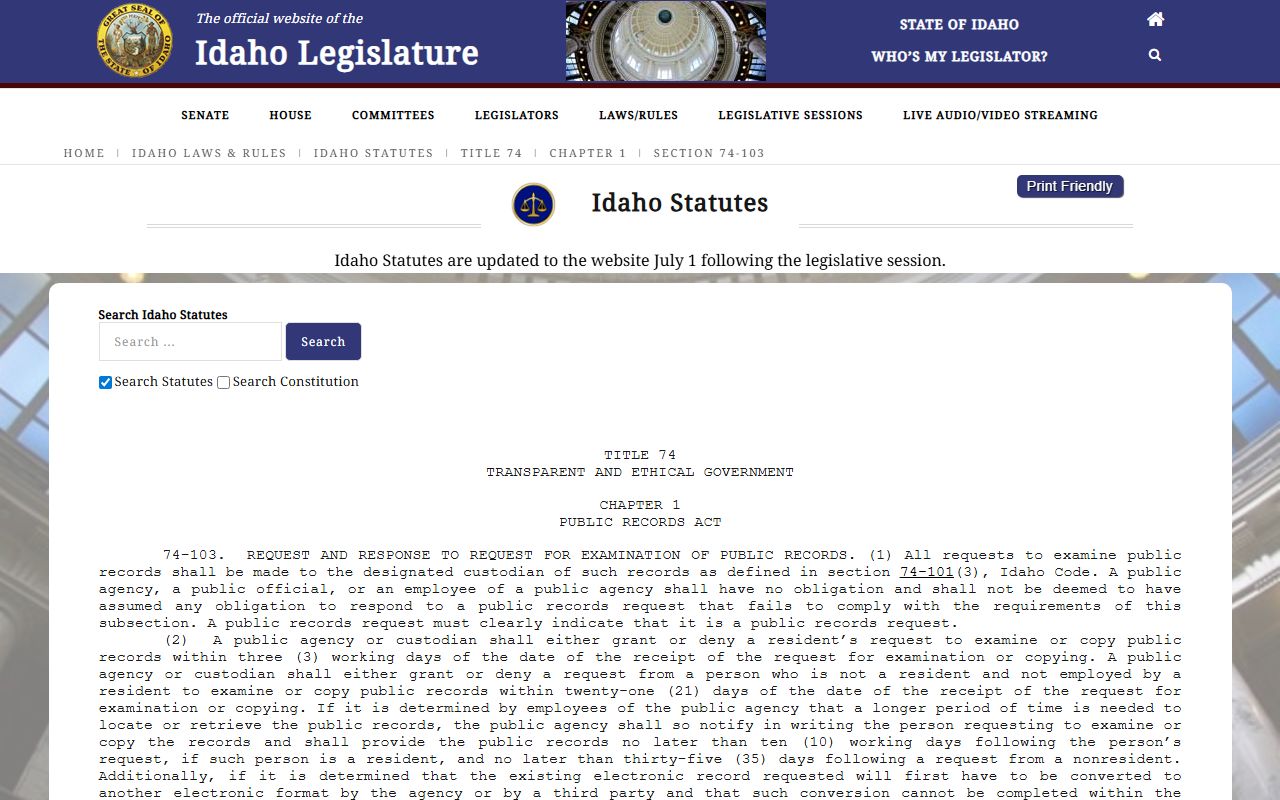
The timing rule does not force release of sealed criminal material, but it helps explain how official offices respond to public-record requests.
Idaho Code 74-104 addresses exemptions and is cited by the court record request form for records that cannot be disclosed.
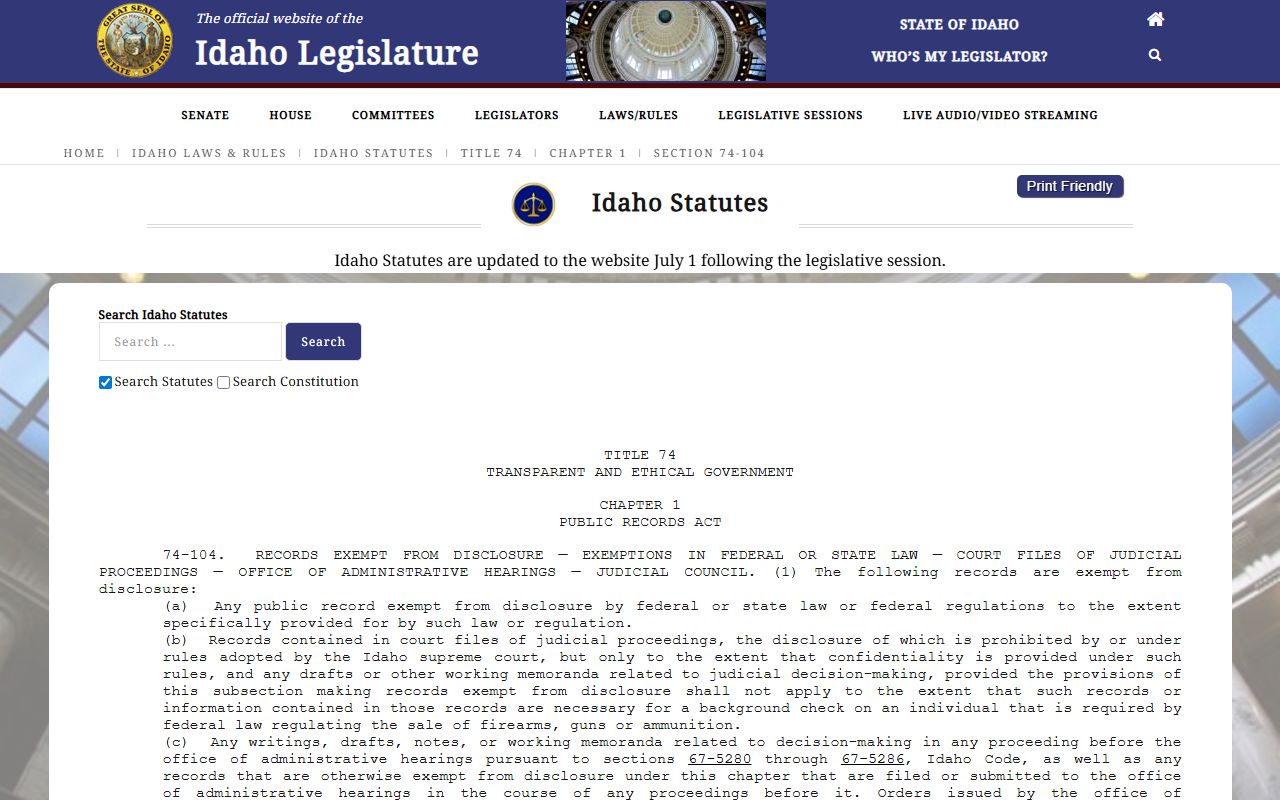
Exemptions are why a clerk may provide a public docket but redact victim information, juvenile details, financial identifiers, or protected addresses.
Bingham County Sealed vs Expunged
Idaho record relief is not one broad deletion rule. Sealing limits public access to a court record. Expungement, in the criminal-history context, can remove or limit qualifying state fingerprint and criminal-history records. For Bingham County cases, a person should identify the case number, review the public docket, request needed public documents, and then file the correct petition or request in the court or agency that controls the record. The order controls what the clerk, iCourt, Idaho State Police, and background-check channels may show.
| Point | Sealed | Expunged |
|---|---|---|
| Public Visibility | Restricted from public view by rule, statute, or court order. | Removed or limited in a qualifying criminal-history record process. |
| Idaho Criminal Context | The official court file may be sealed in qualifying non-conviction situations and other court-ordered settings. | Idaho Code 67-3004 covers certain non-conviction fingerprint and criminal-history expungement requests. |
| Authorized Access | Courts, law enforcement, or authorized agencies may still have access in some settings. | Access depends on the statute, agency record, and court order. |
| Common Trigger | Juvenile, protected, shielded, warrant, confidential, or court-ordered restrictions. | No charge within one year, acquittal, or dismissal of all charges in qualifying non-conviction cases. |
Idaho Code 67-3004 addresses criminal history and non-conviction expungement for qualifying Idaho records.
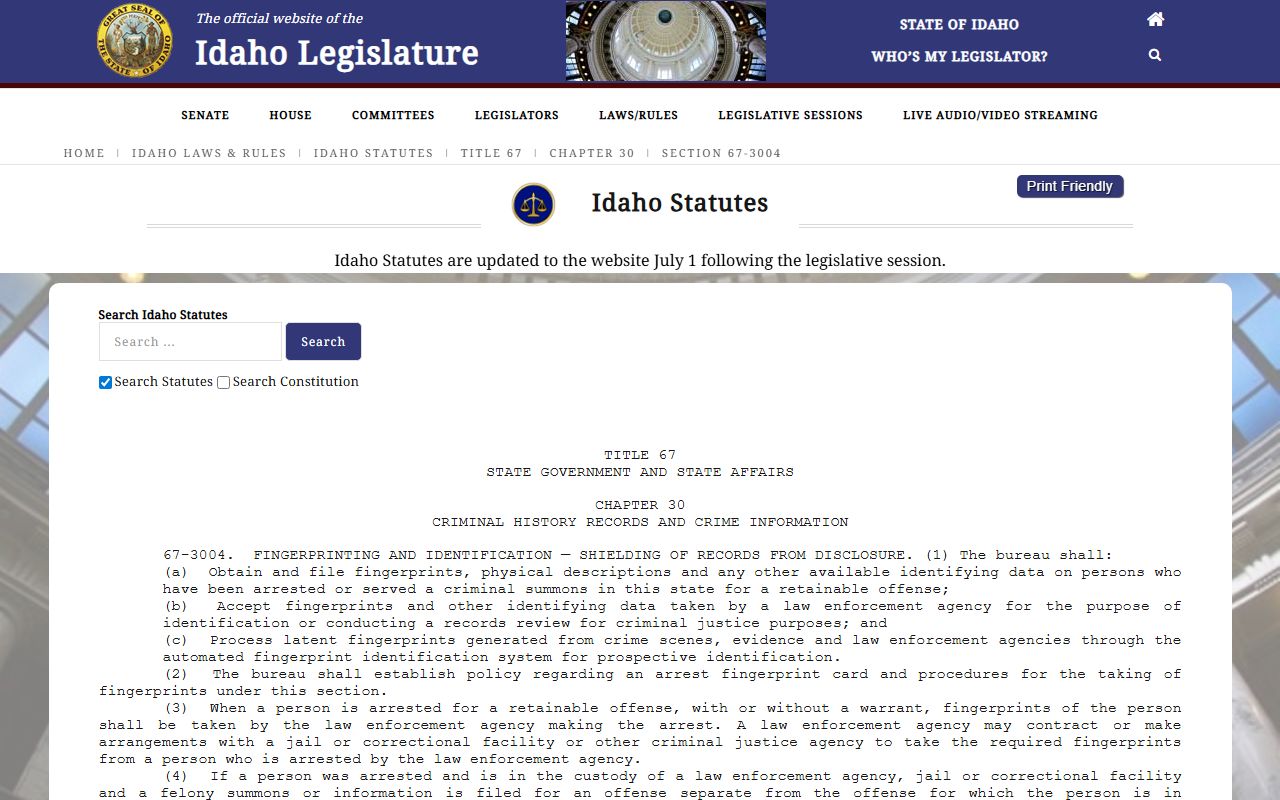
The statute is most relevant when the criminal court record ended without a conviction and the person is checking whether public visibility can be limited.
Bingham County Criminal Filing Tools
Idaho Guide and File is a statewide self-help filing tool, not a public criminal-record search database. It can matter when a person is preparing court paperwork in a qualifying case type, but criminal record lookup still starts with iCourt and the clerk. Idaho File & Serve and professional access rules also serve filing needs, while public users rely on Smart Search, Search Hearings, courthouse kiosks, and clerk requests for criminal case records.
Idaho Guide and File shows the difference between guided filing tools and public criminal case lookup.
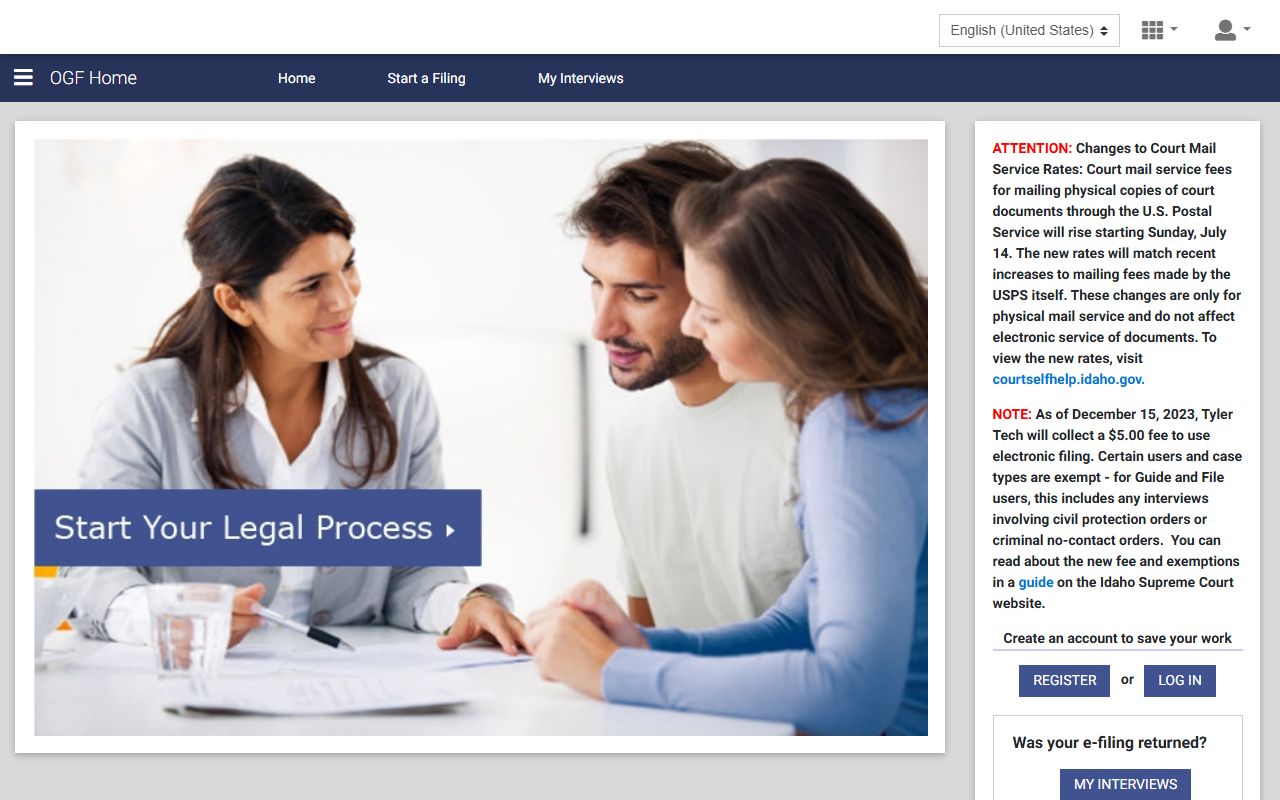
Use filing tools for forms and court submissions, then use iCourt or the clerk to verify what has actually entered the public criminal case record.
Restricted Bingham County Criminal Records
Restricted criminal court records include juvenile cases, sealed cases, shielded records, certain warrant materials, protected addresses, minor names, financial identifiers, medical or mental-health material, sensitive victim or witness information, and law-enforcement investigatory records. Idaho Code 74-105 can limit release of law-enforcement and investigatory records, which is one reason arrest reports and police files should not be treated as the same thing as public court dockets.
iCourt states that sealed cases and information exempt from disclosure by court order or Idaho Court Administrative Rule 32 will not appear on the portal. Sealed case event entries are not visible in search results, but orders to seal that accompany a sealed record can remain public. The Bingham court record request form says confidential case files and records are exempt from disclosure, so a criminal court record request may return a redacted copy, a partial file, or a denial for the protected material.
Note: A visible criminal case number does not make sealed affidavits, juvenile records, or protected victim information public.